Juice the apples using a juicer. If you don't have a juicer, you can use a blender or food processor and then strain out the pulp.
Pour the apple juice into a large fermentation vessel, such as a beaker or a glass jug.
Add about a teaspoon of wine, beer, or champagne yeast to the apple juice.
Gently swirl the container to mix the yeast into the juice.
Place a fermentation airlock on top of the container to allow CO2 to escape while preventing oxygen from entering.
Add a small amount of water to the airlock up to the fill line.
Let the mixture ferment for 5 to 7 days, or until the bubbling in the airlock stops. This indicates the sugar has been converted to alcohol.
After the first fermentation is complete, carefully pour the hard apple cider into a wide-mouthed container, leaving the sediment at the bottom behind.
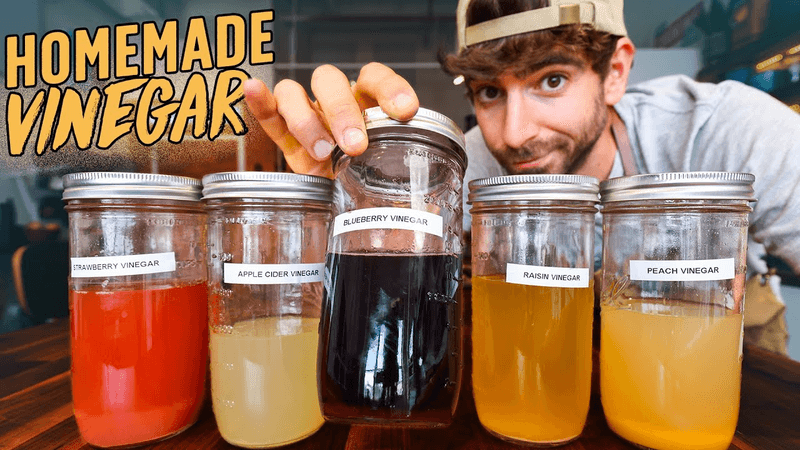
Add a couple of tablespoons of raw, unpasteurized apple cider vinegar. This will introduce the acetobacter (vinegar mother) to start the second fermentation.
Cover the opening of the container with a piece of cheesecloth and secure it with a rubber band or string. This allows air in for the aerobic fermentation but keeps out bugs.
Let the container sit at room temperature, out of direct sunlight, for 3 to 4 weeks. A mother (a slimy mat) will form on top as the alcohol converts to acetic acid.
Once the vinegar is ready, carefully remove the mother. You can save it for your next batch of vinegar.
Bottle the finished apple cider vinegar, leaving any sediment at the bottom of the container.
Nutrition data is AI-estimated and may not be fully accurate.

This recipe was created by analyzing the video with AI. For full details, please refer to the original video.